

Major Types of Digital Marketing Campaigns: A Strategic Guide
Every business strategy needs a way to actually get executed, and that’s where digital marketing campaigns come in. They’re not just “ads” or “posts”, they’re the working machinery that takes broad goals like growing revenue, breaking into a new market, or building brand awareness, and turns them into specific, trackable action you can run day to day.
It helps to compare this against how advertising used to work. A company would sink money into a billboard or a TV spot, then sit back for weeks, sometimes months, hoping sales would move. There was no real way to know who actually saw the ad, let alone whether it had anything to do with someone deciding to buy.
Digital marketing campaigns turned that whole model upside down. Every dollar you put in can now be tracked, tested, and adjusted almost as it happens. You can see who clicked, what they did afterward, and exactly what it cost to get them there. This guide walks through the major types of digital marketing campaigns available today, so you can work out which ones earn a place in your strategy.
Digital Marketing Campaigns: AI Overview Quick Summary
Long-term assets (build over months, compound over years):
- SEO (Search Engine Optimization)
- Content Marketing
Fast lead capture (results within days):
- PPC (Pay-Per-Click)
- SEM (Search Engine Marketing)
Direct retention (nurtures existing relationships):
- Email Marketing
Most digital marketing campaigns that actually work pull from all three buckets at once, fast channels bring in revenue right away, while the long-term assets quietly build cheaper, more sustainable growth in the background.
Core Digital Marketing Campaigns Head-to-Head Comparison
Before getting into each one individually, here’s a side-by-side look at how the major types of digital marketing campaigns compare.
| Campaign Type | Primary Goal | Time-to-Results | Key Performance Indicator (KPI) |
| SEO | Organic visibility & authority | 4–12 months | Organic traffic, keyword rankings |
| PPC | Immediate, targeted leads | Days | Cost per click (CPC), conversion rate |
| SMM | Community & engagement | Weeks–months | Engagement rate, follower growth |
| Content | Trust & funnel nurturing | Months | Time on page, lead magnet downloads |
| Retention & repeat sales | Immediate | Open rate, click-to-open rate | |
| Affiliate | Performance-based sales | Weeks–months | Conversions per referral, ROAS |
What are Digital Marketing Services?
If you’re new to this world, “digital marketing services” can sound like one of those vague, catch-all phrases, and honestly, it kind of is. But at its core, it just means any marketing activity that runs through digital channels: search engines, social platforms, email, websites, apps, rather than offline media like print, radio, or TV.
What actually separates digital marketing services from their older counterparts comes down to three things.
- First, cost. Running a digital campaign is, in nearly every case, far cheaper than buying TV airtime or newspaper space. A small business can get a real campaign off the ground for a few hundred dollars, something that simply wasn’t on the table back in the print-and-broadcast era.
- Second, targeting. Digital platforms let you zero in on remarkably specific criteria: age, location, job title, browsing habits, interests, even what device someone’s using. Traditional ads were more like a megaphone pointed at a crowd, hoping the right people happened to be in earshot.
- Third, and arguably the biggest shift, trackability. With digital marketing services, you can see exactly what happens after someone encounters your campaign. Did they click? Visit your site? Make a purchase, and if so, what did it cost you to get them there? None of that was ever realistic with a billboard or a magazine ad.
Put simply, digital marketing services hand businesses of any size the same kind of tools that used to be reserved for companies with huge ad budgets, plus the data to actually prove whether those tools are working.
Deconstructing the Major Digital Marketing Campaigns
With the basics out of the way, let’s get into specifics. Below, we’ll go through each major campaign type on its own, what it involves, where it shines, and where it tends to come up short.
1. Search Engine Optimization (SEO) Campaigns
SEO campaigns are about improving your site’s visibility in organic, unpaid search results. That means keyword research, on-page optimization, technical site health (page speed, mobile usability, crawlability), and building authority through quality backlinks.
Here’s one of the best digital marketing campaign examples of compounding value: picture a single blog post that lands on page one for a relevant keyword. That post can keep pulling in traffic, leads, and even sales for years, all without spending another dollar on ads. That’s the appeal of SEO, it’s an asset that grows in value over time instead of losing value the moment you stop paying for it.
Pros: Once you’ve earned a solid ranking, those clicks are essentially free. There’s no per-click cost chipping away at your margins, and the traffic tends to be highly intent-driven since people are actively looking for a solution.
Cons: SEO is a long game. It usually takes several months, longer in competitive industries, before you see any real movement. If you need results next week, SEO on its own won’t get you there.
2. Social Media Marketing (SMM) Campaigns
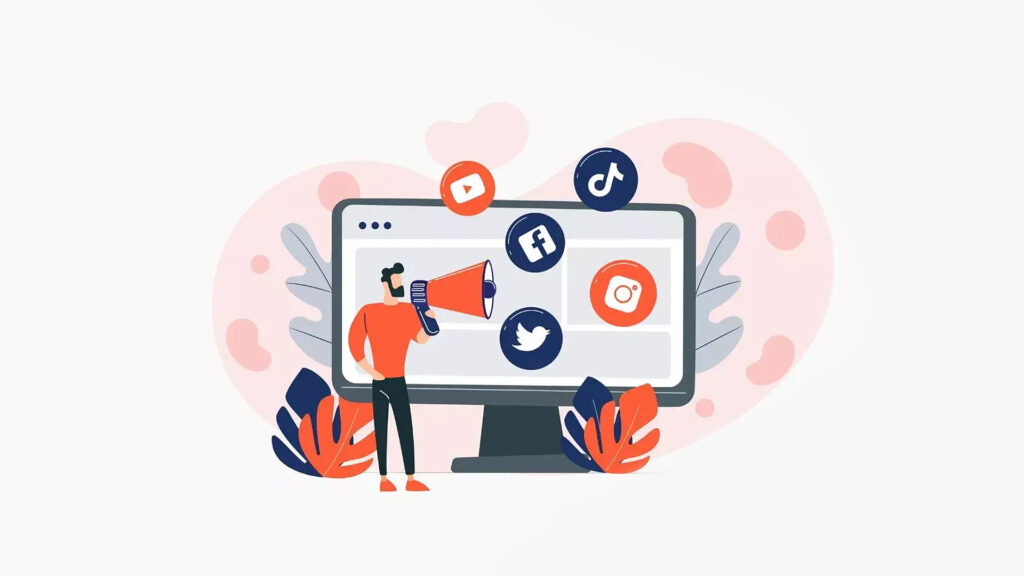
Social media marketing is about building and nurturing a community around your brand on platforms like Instagram, LinkedIn, and TikTok. Each one has its own personality, LinkedIn skews toward thought leadership and B2B networking, while Instagram and TikTok lean hard into visual storytelling and short-form video.
SMM rarely works in isolation. It’s strongest when paired with content marketing, blog posts, videos, or infographics get repurposed and pushed out across social channels, stretching their reach well beyond your website.
Among the various examples of digital marketing campaigns, SMM stands out for being a two-way street. Unlike a billboard, your audience can comment, share, react, and, depending on the day, either call you out publicly or sing your praises.
- Pros: Direct, real-time dialogue with your audience. You can answer questions, smooth over concerns, and build loyalty in a way that feels personal rather than transactional.
- Cons: Algorithm dependency is real. Platforms shift how content gets distributed all the time, and something that worked great last quarter can suddenly fall flat with zero changes on your end.
3. Pay-Per-Click Advertising (PPC) & SEM Campaigns
PPC and SEM campaigns put your brand right in front of people actively searching for what you offer, by bidding on relevant keywords. When someone searches a term you’ve bid on, your ad shows up, often right at the top, and you only pay when they actually click.
This is one of the fastest ways to reach high-intent users. Where SEO can take months to gain traction, ppc digital marketing campaigns can start sending traffic to your landing page within hours of going live.
The real work happens after the click, though. A well-built landing page, fast, relevant, and clearly pointed at one specific action, is often the difference between a campaign that converts well and one that quietly drains your budget.
- Pros: Instant visibility and tightly targeted leads. Launch a campaign in the morning, see traffic by the afternoon, invaluable for time-sensitive promotions or product launches.
- Cons: The moment you stop paying, the traffic stops. PPC doesn’t build a lasting asset the way SEO or content does, it’s closer to renting attention than owning it.
4. Content Marketing Campaigns
Content marketing campaigns center on creating genuinely useful material, blog posts, educational graphics, downloadable ebooks, case studies, and the like, built to guide your audience through their decision-making process.
The point isn’t to sell right away. It’s to give value upfront. Someone researching a problem stumbles onto your blog post, finds it genuinely helpful, and starts to see your brand as credible. As that person moves further down the funnel, they’re far more likely to consider your product when they’re finally ready to buy.
Among the various digital marketing campaigns out there, content marketing stands out for how naturally it connects to everything else. Blog posts feed SEO. Ebooks fuel email list growth. Infographics get shared across social. It’s the connective tissue holding a lot of other strategies together.
- Pros: Builds genuine trust and positions your brand as an authority, which pays off across every other channel you run.
- Cons: It’s resource-heavy. Producing quality content consistently takes time, research, writing, design, and usually a fair amount of trial and error before you find what actually resonates.
5. Email Marketing Campaigns
Email marketing might feel a bit “old school” next to flashier social trends, but don’t write it off. One of its biggest advantages often goes unnoticed: you own your email list. Unlike followers on a social platform, who technically belong to that platform, your subscribers are a direct line of communication that no algorithm change can take away from you.
Email works well for newsletters, product updates, exclusive offers, and re-engagement sequences for people who’ve gone quiet. And compared to most other channels, email tends to deliver surprisingly high click-to-open rates, especially when your list is well-segmented and your messaging feels personal instead of generic.
- Pros: It’s a database you own outright. No platform can change its algorithm overnight and wipe out your reach.
- Cons: Lists naturally decay over time as people switch emails or simply stop engaging. There’s also the constant risk of landing in spam if your sending practices aren’t managed carefully.
6. Affiliate & Influencer Marketing Campaigns
These two often get lumped together, but they work a bit differently. Affiliate marketing means partnering with publishers or sites that promote your product using unique tracking links, earning a commission on every sale they bring in. Influencer marketing means working with creators who’ve already built trust with a specific audience and can introduce your brand to that audience in a way that feels authentic.
What ties them together is the performance-based setup. With affiliates especially, you typically pay only when a sale happens, which keeps your risk fairly low compared to upfront ad spend.
- Pros: Low-risk, performance-based payouts mean you’re rarely spending money without something to show for it.
- Cons: Managing these relationships isn’t hands-off. Finding the right partners, negotiating terms, tracking performance, and keeping those relationships healthy takes real, ongoing effort.
7. AR & VR Marketing Campaigns
Now we’re heading into more experimental territory. Virtual Reality (VR) marketing drops users into a fully digital environment, think a virtual showroom or an interactive brand experience through a headset. Augmented Reality (AR) instead layers digital elements onto the real, physical world, like letting a customer “see” how a piece of furniture would look in their actual living room through their phone camera.
These campaigns are still fairly niche, but they’re catching on fast, especially among brands trying to stand out in crowded markets. A genuinely well-done AR or VR experience has real viral potential, the kind of thing people screenshot, share, and talk about.
- Pros: Highly immersive experiences that can generate real buzz and set your brand apart from competitors still relying on static images and text.
- Cons: Development costs can run high, and the skills required aren’t something most in-house marketing teams have on hand yet.
Which is the Best Digital Marketing Campaign for Your Company?
Here’s the honest truth: there’s no single “best” digital marketing campaign that works for everyone. What works brilliantly for a B2C ecommerce brand might fall completely flat for a B2B software company, and the reverse is just as true.
The right place to start is understanding how your specific audience actually behaves. Where do your customers spend time online? Are they actively searching for solutions, which favors SEO and PPC, or do they need to be introduced to your brand first, which favors content and social?
From there, budget plays a major role. If funds are tight, channels with lower upfront costs but longer timelines, SEO and content, often make more sense to start with, layering in PPC for specific high-priority campaigns or launches.
Finally, don’t underestimate the value of bringing in expert help. A good B2B digital marketing agency can look at your specific situation, industry, competitors, existing assets, and help build a cross-channel engine where each campaign type reinforces the others instead of operating on its own. The companies that win long-term aren’t the ones that found one perfect channel; they’re the ones that built a system where multiple channels work together.
Not sure where to start? Working with an experienced digital marketing agency in Dubai takes the guesswork out of channel selection. GTECH builds integrated campaigns that combine SEO, paid media, content, and email into one cohesive strategy designed to grow your business consistently.
FAQ's
Q1: How do strategy and campaign differ?
Think of strategy as your overall game plan, the big-picture goals you’re working toward, like increasing market share or entering a new region. A campaign is a specific, time-bound effort aimed at achieving a piece of that strategy. So your strategy might be “expand into the GCC market,” while your campaigns could include a localized PPC push, a region-specific content series, and a social media awareness drive, each one feeding into that broader goal.
Q2: Which campaign is best for low budgets?
If money’s tight, content marketing and organic social tend to offer the best return relative to upfront cost, since they don’t require ad spend to get going (though they do take time and effort). SEO is another solid choice for the long game, since the traffic it generates is essentially free once you’ve earned the rankings. PPC can still work on a small budget too, just keep campaigns tightly targeted and start small while you figure out what converts before scaling spend.

Related Post
Publications, Insights & News from GTECH