

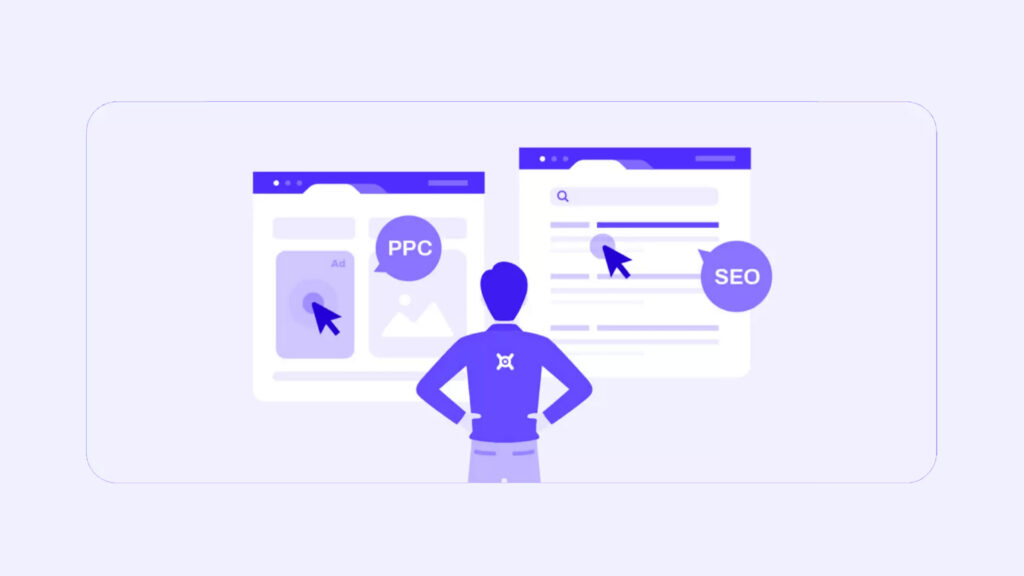
SEO vs. PPC: Differences, Pros and Cons Explained

The difference between PPC and SEO is the focus of the former is to avail traffic from paid search socially and globally. SEO looks at obtaining traffic from organic search. A proper evaluation and comparison between SEO versus PPC will give you insights into which one to choose for your business.
What is SEO?
SEO is the process of optimizing your pages to rank in organic search results. It encompasses four areas
- Keyword research- Finding out what people are searching
- On-page SEO- creating content that searchers are looking for
- Off-page SEO- Building trust and authority from other websites
- Technical SEO- Ensure search engines can find, crawl and index your content.
Keyword research
Keyword research is the process of understanding the keywords and phrases the target customers are using when searching in search engines. You may find these keywords by using a keyword research tool
On- page SEO
On-page SEO is about the type of content that the target audiences want to see. Doing so will give you inputs on why searchers are making a query. This is referred to as search intent, Being aware of search intent is important as you would want to align your content with it. Though on-page SEO does not end with search intent. There are other important factors like
- Strategically placement of keywords in the title
- Creation of a compelling title
- Using short and descriptive URLs
- Optimizing pages.
Off-page SEO
Off-page SEO is where you do things outside your site to showcase to Google that your page deserves to rank. One of the things that you need to do is build high-quality backlinks. It is really important as it ranks among the top three Google ranking factors. They serve as votes from other websites. Apart from links, there are other important off-page factors, especially for local SEO that include reviews, citations etc.
Technical SEO
Technical SEO is all about making sure search engines can find, crawl and index your content. This is really important as you cannot rank if search engines are not aware that you exis
Pros
SEO versus PPC, which module are you looking to invest in, below are some of the positives of SEO.
Organic traffic has staying power
With your target keywords as long as you rank high in Google, you will be able to obtain consistent traffic to your website. Theoretically speaking you could stop publishing for a while but still, the traffic should continue to flow.
SEO works out to be a cheap option in the long run.
A comparison of PPC vs. SEO indicates that the cost of PPC is higher. So, it is reasonable to figure out that SEO is cheaper in the long run.
Cons
In the comparison of PPC vs. SEO, there are some downsides
SEO takes time
SEO does take time but in the long run, it is effectively a cost- effective strategy. Though the timeline of the results may be at the higher end but it yields results in the long run.
SEO requires authoritative and unique content
People are the same online and they want to learn from experts. This is especially true for sensitive topics like finance and healthcare. According to Google’s official Search Quality Rater Guidelines, sensitive subjects are referred to as Your Money or Your Life (YMYL) topics, meaning you must prove your website has the required expertise, authenticity, and credibility.
A few keywords can be really competitive
There are a few keywords that may be dear to you but understand it is going to take time, money and a considerable level of effort to achieve tangible results. Though not impossible you will need to start from the bottom.
What is PPC
Online advertisers who use PPC advertising pay a fee each time a user clicks one of their adverts. Search ads seem to be a common format, though social media falls into this category too. Below is what PPC advertising for Google ads conveys
- Keyword research- it gives you an idea of what your customers are searching
- Bid setting- deciding how much you want to pay for a click
- Ad creation- the creation of a compelling and relevant ad
- Audience targeting- deciding on who would like to see your ad.
Keyword research
In a comparison of PPC vs SEO like how you are choosing a keyword for the latter, you need to choose keywords for PPC targeting. This means doing keyword research.
Bid setting
Bid setting is about deciding how much you intend to pay for Google for an ad click. If your rivals outbid you, Google will show your ad less frequently, resulting in fewer clicks.
Ad creation
Creation of ad is about deciding where your ad will stay and where it will send people. As outlined in the Google Ads Help Center documentation, the ads you launch are assigned a Quality Score by Google. A higher quality score means that the ads will be seen by more people and you will be paying less for clicks.
Audience targeting
Audience targeting is about deciding who will see your ad. You may target people based on who they are, what are their interests and much more.
Pros
PPC vs. SEO and the following are some of the positives associated with PPC
PPC is fast
PPC is almost instant. You can head over to any ad platform and start a campaign immediately.
PPC sets the tone for immediate experimentation.
The landscape of PPC is that it provides quick feedback may build up a campaign, do A/B testing, and track the outcomes to determine what is effective and what is not.. On the other hand, the major difference between SEO versus PPC is that the latter takes time. Hence it can be difficult to attribute success or failure to any single individual tactic or change.
PPC paves for granular setting
Most PPC platforms will allow you to choose what you want to target. Examples are geography, demographic targets etc.
Cons
PPC is not a bed of roses and there are potential downsides to it
PPC can be comparatively expensive
According to industry paid advertising benchmarks published by WordStream, PPC costs in competitive sectors can rise quickly—for example, the keyword ‘car insurance’ can cost an average of $40 per click.
PPC can lose effectiveness
The longer the campaigns run the less effective it tends to become. A result could be that people may end up seeing your ads regularly. PPC is not set and you forget it later. You need to constantly refresh your ads.
You will need money to make more money
PPC means that you need a budget to start a campaign. There is a possibility that in the first few months, you may lose money as you figure out how to optimize your campaigns
Which is better SEO or PPC?
By now we have a fair understanding of SEO and PPC along with their pros and cons. Now comes the difficult part in comparing SEO versus PPC there is nothing better or worse than the other. Both are legitimate and it all depends on where one platform could make more sense than the other.
- You have an innovative product To get organic traffic you need to target topics that people are searching for already. To increase awareness, social media PPC would be preferable. On the other hand, SEO will be a great option if lots of people are looking for your topic or product.
- Targeting informational keywords as you are creating top-of-the-funnel content- Generally speaking, PPC keywords that consumers are searching for information rather than products are bad prospects. The reason being very few individuals will convert to customers so it would be difficult to make a return on your investment.
- You are trying to promote commercial content- at a generic level, people do not want to link to commercial content like products or landing pages. In order to rank them at a higher page you have to be using strategies like the middleman method. Consider using PPC if you need results right away because you can guide traffic to the landing page.
The simple solution is to get the best out of both worlds, you need to use both PPC and SEO.
For more such blogs, Connect with GTECH.
FAQs: SEO vs. PPC Differences
Q1: What is the main difference between SEO and PPC?
The primary difference is how you acquire traffic. SEO focuses on optimizing your website to earn organic, unpaid rankings over time. PPC (Pay-Per-Click) involves paying for top ad placements, where you are charged a fee every time a user clicks your link.
Q2: Is SEO or PPC better for fast results?
If you need immediate visibility, PPC is the better choice. Once your campaign launches, ads appear at the top of search results instantly. SEO is a steady, long-term strategy that usually takes three to six months to build momentum and achieve page-one rankings.
Q3: Which is more cost-effective: SEO or PPC?
PPC requires a continuous ad budget, meaning you pay for every visit. SEO requires an upfront investment, but once you rank, the clicks are free. Partnering with an expert SEO agency in Dubai helps build this sustainable, highly cost-effective organic presence over time.
Q4: Do people click on organic SEO results or PPC ads more?
Statistics consistently show that the vast majority of searchers skip paid ads and click on organic SEO results. Users naturally trust organic listings more, viewing them as credible, earned authorities rather than simply paid promotional placements.
Q5: Can I use both SEO and PPC at the same time?
Absolutely! Combining them is highly effective. You can use PPC for instant traffic and to test which keywords actually convert into sales. Then, you can apply that valuable data to your SEO strategy to build long-term organic rankings for those winning keywords.
Q6: What happens to my traffic if I stop paying for PPC?
This is the biggest drawback of Pay-Per-Click advertising. The moment your ad budget runs out or you pause your campaigns, your search visibility instantly drops to zero. Unlike SEO, which provides lasting equity, PPC traffic stops the second you stop paying.
Q7: How long does it take for SEO to show results compared to PPC?
PPC provides real-time traffic and leads the exact day your ads go live. Conversely, SEO is a marathon. It typically takes three to six months of consistent technical optimization, content creation, and link-building to see a significant climb in organic search rankings.
Q8: Is PPC better for new product launches?
Yes, PPC is exceptionally good for new product launches, time-sensitive promotions, or short-term campaigns. Because it offers immediate visibility and allows for precise targeting based on demographics and location, it is the fastest way to drive relevant leads to a new offer.
Q9: Does running PPC ads improve my organic SEO rankings?
No, Google keeps its paid advertising and organic search algorithms completely separate. Spending money on PPC will not directly boost your SEO rankings. However, the user behavior and conversion data gathered from PPC can be used to refine and improve your overall SEO strategy.
Q10: How do I choose between SEO and PPC for my business?
Choose PPC if you have a consistent ad budget, need immediate leads, and can quickly launch targeted landing pages. Focus on SEO if you want to build long-term brand authority, earn sustainable traffic without paying per click, and maximize your digital ROI.

Related Post
Publications, Insights & News from GTECH