Open Source AI Summit: A High-Performance Event Platform for the Future of AI

Objective
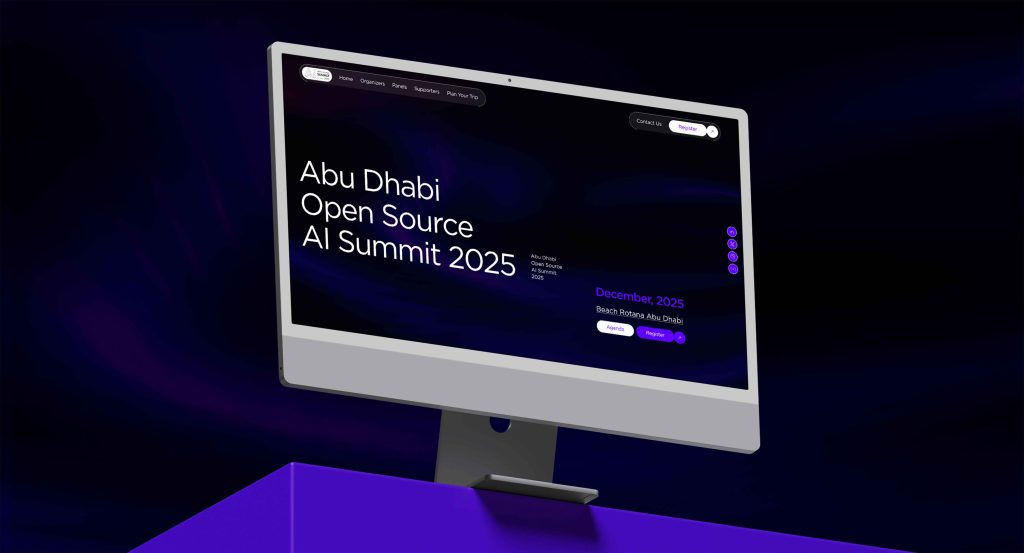
Technology Innovation Institute’s (TII) Open Source AI Summit brings together a diverse group of academics, technical experts, and senior industry leaders to discuss the future of open-source AI. This summit serves as a platform for thoughtful dialogue on the strategic, technical, and ethical challenges of widespread adoption of open-source AI, including barriers to innovation, ethics, governance, data control, and commercialisation. TII required a digital platform that reflected this weight and urgency, balancing academic rigour with global accessibility.
Challenge
- Information Architecture: The site needed to organise a dense amount of logistical and academic content, specifically Organisers, Speakers, Program, Supporters, and Plan Your Trip details, without overwhelming the user.
- Target Audience: Unlike a standard tech conference, the audience included PhD-level researchers and policymakers. The design had to avoid marketing “fluff” and instead signal authority, clarity, and scientific precision.
- Performance Requirements: Anticipating viral interest from the global open-source community upon the announcement of new models (like Falcon LLM), the site needed to handle massive concurrent traffic without latency.
Solution
1. Strategic UI/UX Design
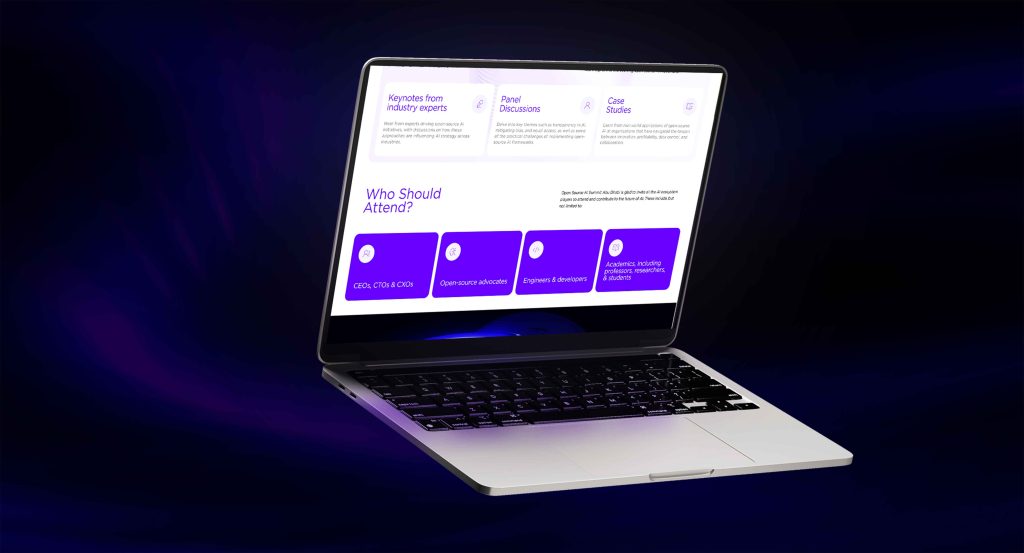
- Scientific Modern Aesthetic: We utilised a clean, white-space-dominant interface with subtle “node-network” animations to suggest neural connectivity. This visual language reinforced the summit’s focus on data control and governance.
- Section-Specific Optimisation:
- Program: We designed an intuitive, filterable agenda that allowed attendees to quickly parse complex technical tracks.
- Speakers & Organisers: A clean grid layout highlighted the credentials of global thought leaders, establishing immediate prestige.
- Plan Your Trip: We integrated clear logistical guides and map interfaces to assist international delegates in navigating Abu Dhabi.
- Supporters: A dedicated section to visibly acknowledge the ecosystem of partners driving open-source innovation.
2. High-Performance Tech Stack (HTML/CSS/JS)
- Static Site Stability: To solve the “Traffic Spike” challenge, we built the site using a lightweight Static HTML/JS architecture. By removing the need for database queries on every page load, we ensured the site was virtually crash-proof, even during live keynote streams.
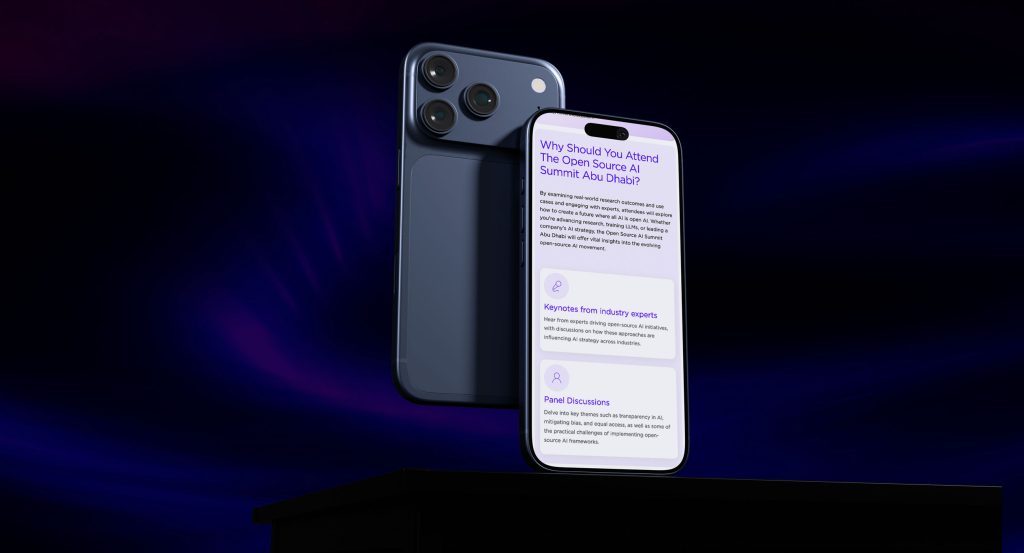
- Speed Optimisation: We hand-coded the frontend interactions, ensuring that the heavy content sections (like the extensive Speaker list) loaded instantly on mobile networks for delegates travelling from abroad.
Results
The site maintained 100% uptime during the event’s critical launch window and high-traffic periods. Analytics showed that users navigated to the Program and Plan Your Trip sections with high efficiency, validating the “glanceable” UI approach. The polished, content-first design successfully positioned the summit as a premier academic gathering rather than just a commercial event.
Conclusion
The Open Source AI Summit project highlights GTECH’s ability to translate complex academic narratives into accessible digital experiences. By choosing a robust stack over bloated CMS options, we delivered a platform that was as efficient and transparent as the open-source technologies it celebrated.