

Pages With High Rankings but Low Impressions: 10 Hidden Causes

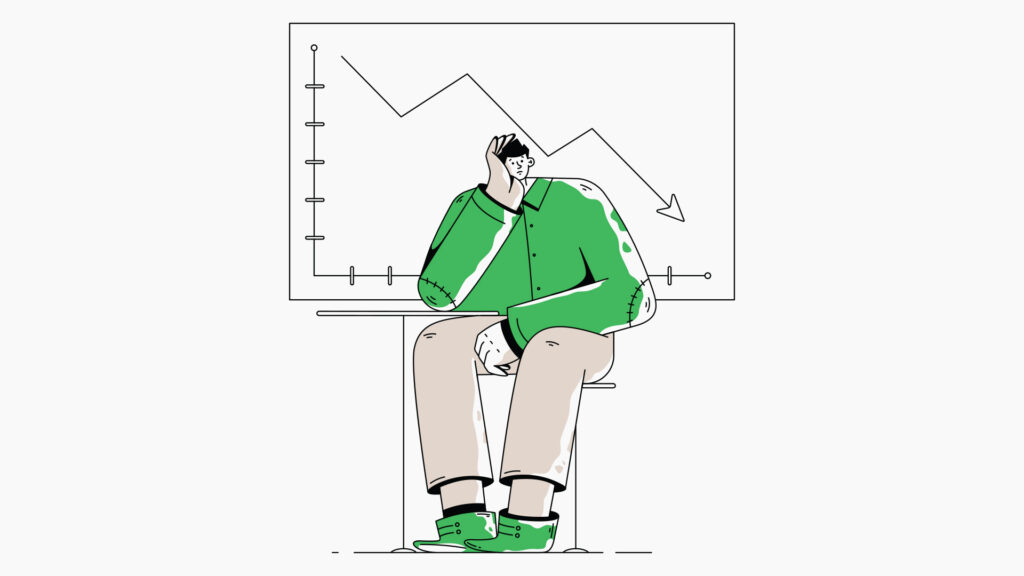
It is an SEO puzzle that has no answer. Your performance in your tracking tools shows the same result across all of your performance indicators. Arrayed in front of you is your number-one ranking; your CTR is a solid number as well. However, a glance at the numbers report in your Google Search Console shows the volume of traffic coming through to your site is a very low number.
You are experiencing the phenomenon of high CTR, but low-to-no impressions.
The majority of the information available on SEO is focused on achieving better rankings, which in turn should result in more traffic. Very few resources guide the feelings of a person who is already ranked well within the SERPs and is not receiving the expected volume of traffic. Thus, if you have a high CTR with very few impressions, you are probably experiencing this issue because your listing has good efficiency but remains invisible to a great many people.
To help troubleshoot, identify and solve this issue, there are ten reasons for this occurrence outlined below.
The “Long-Tail” Trap (Low Search Volume)
When you have a high click-through rate (CTR) but low impressions, it usually means that the keyword you are ranking for doesn’t get searched often. For example, if you’ve optimised for a very long-tail keyword that’s only searched by 5 different people, you may have a CTR of 100% because all 5 of those people clicked on your link!
- Why This Happens: When you optimise for a keyword with very little search volume, it often happens because you are targeting highly specific industry terms.
- What To Do: Check the Google Search Console (GSC) or your keyword research tool and compare the monthly search volumes for the keyword you are targeting against the number of impressions you are receiving for that keyword (if both search volumes are very low, then that specific keyword is probably not being searched by very many people anymore).
- What You Should Do: You need to expand your scope of what you are optimising for. Instead of optimising for “Red leather shoes for running in rain 2024,” for example, you might want to optimise instead for “Waterproof running shoes”.
Google SERP Layout Changes
Today’s Google serp layout has become so complex that the image shown in this Post,” even with “Rank # 1” still may not appear until almost 1000 pixels from top (which is far too low when compared to other competing results), due to having 4 paid ads above it as well as having Local Pack/People Also Ask feature/Featured Snippet box at top.
- Issue: Therefore, you need to be able to see where you’ve been ranked or if you have been ranked at all, as it is very difficult, even with a high SEO ranking, to see or know what someone has done. If so, something has happened, and typically it is going to be because of how mobile devices display search results.
- How to Check: Take a look at the mobile version of your page. Is there any scrolling necessary to get down to your organic listing? If you have to scroll down to see your listed item, this means that you will never be seen by an individual who does not scroll.
- Get Solution: Therefore, it would be advisable that you consider investing in a Featured Snippet opportunity or possibly conducting a small PPC advertising campaign to help ensure top-of-page placement. This is another significant cause of why my impression share continues to be less than what I would like compared to other advertisers that I have worked with on Google, specifically PPC campaigns related to keywords/search terms within speciality areas.
Zero Click SEO
As part of the continually growing strategy of digital marketing, a significant rising strategy is zero-click SEO. Zero click occurs when Google answers the user’s question directly on the result page (no need to click and sometimes not even to scroll).
- The Issue – When the user sees the answer (example, “Capital of UAE”), they leave. You may have received an impression, but because they receive an answer almost instantly, they may not have taken a moment to look at your link, resulting in decreased engagement metrics for you. This reduced interaction directly affects why my impression share is so low, despite my maintaining solid rankings.
- How to Check – You can check your keywords for “Quick Answers” and “Knowledge Panels.”
- How to Improve – Create content in a way that provides a long answer to complex questions, which would require more than just a couple of lines to explain. By doing this, you will encourage the user to click.
What is Position Zero (Featured Snippets)
- Position Zero is the upcoming featured snippet block, which is displayed above the organic search results.
- The Issue: A featured snippet may divert searchers away from your organic listing’s result due to the user selecting “Position Zero” when they perform their search.
- Checking: You may utilise a keyword research tool such as Ahrefs or Semrush for featured snippet opportunities for your target keyword.
- How to Inch Closer to Snippet Yourself: Use a list-style format (bullet points), and direct responses to the questions you’re trying to answer in your content as a method of securing your own “Position Zero” featured snippet.
Keyword Intent Mismatch
Google’s algorithms are now utilising Google neural matching to interpret the underlying intent behind a user query more accurately than ever before.
- The Issue: Your site may be ranking for a keyword based on the way it is written, but in reality, because Google understands that users are looking for something different in their search results, even though you are ranking for “Apple” (the fruit), users are searching for “Apple” (the technology company). The disconnect between keyword intent prevents Google from being able to show your web page to a larger audience, which in turn means that your impressions remain low even though your site is being technically “ranked.”
- How to Determine: Look at the other websites ranking on top of your keyword search results. Are they blog-type sites? Are they product pages? Are they videos? If the type of content you have is different from the type of content being presented on these other websites, there is likely a keyword mismatch or a mismatch of intent.
- How to Fix: Reorient the content you currently have to match what users are searching for (such as converting a blog post into a product category page if that is what users are looking for). This solution is a common one for resolving these intent issues.
Technical Glitches: Crawled but Not Indexed
Sometimes, your rank tracker says you are visible, but Google has filtered you out.
- The Problem: You have content that is crawled but not indexed, or partially indexed.
- How to Check: Type site:yourdomain.com/exact-page-url into Google. If no results appear, you aren’t actually in the index, and your rank tracker is deceiving you.
- How to Solve: How to fix crawled but not indexed issues involves checking your noindex tags, canonical tags, and ensuring unique, high-quality content. Submit the URL to GSC for inspection.
Geographic Restrictions
A common question we hear is: “Can impressions be lower than reach?” In social media, reach is potential; in SEO, impressions are actual views.
- The Problem: You might rank #1, but only in a small region (e.g., a specific city), while failing to appear nationally or globally.
- How to Check: Filter GSC performance data by “Country.” You might have high ctr but low impressions because you are only visible in a small country with high engagement.
- How to Solve: Use International SEO tags (hreflang) or create location-specific pages to expand your reach.
Poor Meta Data & User Behaviour
Sometimes, you have high ctr but low impressions because your title tag is so specific that it only appeals to a tiny sliver of users, frightening away the rest of the broad volume.
- The Problem: Over-optimised titles that look like spam or are too niche.
- How to Check: A/B test your title tags.
- How to Solve: Broaden your title’s appeal without losing keyword focus.
Cannibalisation
If you have multiple pages ranking for the same term, they might be splitting the traffic.
- The Problem: Google is rotating two of your pages. On Monday, Page A ranks. On Tuesday, Page B ranks. This instability kills momentum and explains why your impression share is low on specific days.
- How to Check: In GSC, inspect the keyword and look at the “Pages” tab. If multiple URLs appear, you have cannibalisation.
- How to Solve: Consolidate the content into one strong page. This usually stabilises metrics and fixes the high ctr but low impressions fluctuation.
Seasonality
Finally, reasons for low impressions are often external. You might ask, can impressions be lower than reach during the off-season? Yes, if the search demand drops to zero.
- The Problem: You rank #1 for “Christmas decorations” in July. You will have a high rank, perhaps a high CTR from the few people planning early, but abysmal impressions.
- How to Check: Check Google Trends for your keyword history.
- How to Solve: Wait for the season, or diversify into evergreen keywords.
Advanced Diagnosis: Auditing Your Reach
When digging deeper into your analytics, it is vital to distinguish between technical errors and market reality. Many site owners panic and ask: Can impressions be lower than reach in a healthy campaign? The answer is yes. In hyper-local markets or niche B2B sectors, the “reach” (total search volume) is naturally capped. If you are targeting a 5-mile radius, can impressions be lower than reach? Absolutely, because the physical user base is limited, regardless of your rank.
Furthermore, if you are constantly asking why my impression share is low despite great content, you must look at the paid competition. If four competitors are bidding aggressively, your organic result is pushed down, reducing your share. This effectively creates a scenario of high ctr but low impressions, the few who find you click, but most never see you. Always keep an eye on high ctr low impressions as a warning sign that you may have maximised a small niche and need to expand your keyword horizon.
Summary
Understanding reasons for low impressions requires looking beyond the rank. Whether it is keyword intent mismatch, aggressive google serp layout features, or simply targeting a micro-niche, the data tells a story.
If you are struggling to decipher that story, it might be time to bring in experts. If you are looking for a digital marketing agency in UAE to audit your search console, ensure they look at efficiency (CTR) and scale (Impressions) together, not in isolation.
Related Post
Publications, Insights & News from GTECH